> For the complete documentation index, see [llms.txt](https://docs.msgfiler.com/llms.txt). Markdown versions of documentation pages are available by appending `.md` to page URLs; this page is available as [Markdown](https://docs.msgfiler.com/using-msgfiler/msgfiler-filing-script.md).
# MsgFiler Filing Script
By default, MsgFiler 4 can perform many actions on Mail, such as opening mailboxes, creating new mailboxes, flagging and labeling messages, and more. If you do not have any Gmail accounts, MsgFiler 4 can also file messages without any help. It does this by communicating with Apple Mail using AppleScript.
{% hint style="warning" %}
It's strongly recommended to install and activate the MsgFiler Filing Script even if you don't have a Gmail account. It brings all the performance and features from previous versions of MsgFiler back to MsgFiler 4 running o n macOS Sonoma!
{% endhint %}
If you have Gmail accounts, however, MsgFiler 4 needs to perform some extra steps to make sure your emails are filed properly. And unfortunately, MsgFiler 4 cannot perform these steps due to restrictions on apps by the App Sandbox (see [Why a Separate Script?](/using-msgfiler/msgfiler-filing-script/why-a-separate-script.md)) and Mac App Store. By installing the MsgFiler Filing Script in MsgFiler 4's dedicated Application Scripts folder, MsgFiler 4 can now send these extra commands to Mail to enable the following:
* filing messages to Gmail accounts
* selecting the next/previous message after filing to non-Gmail accounts
* archiving messages from MsgFiler 4
* shortcut actions
{% hint style="info" %}
To learn more about the history behind the MsgFiler Filing Script, [click here](/using-msgfiler/msgfiler-filing-script/why-a-separate-script.md).
{% endhint %}
## Installation
Installation of the MsgFiler Filing Script is covered in the [Filing Script](/onboarding/filing-script.md) section of "Onboarding."
The **MsgFiler Filing.scpt** file will be placed in the following location on your computer:
`~/Library/Application Scripts/com.atow.MsgFiler4`
Scripts run by MsgFiler 4 from this folder are allowed to do so outside of the App Sandbox. Commands for archiving Gmail messages or selecting the next/previous message in the Message Viewer are only available when run outside of the App Sandbox.
## Post-Installation
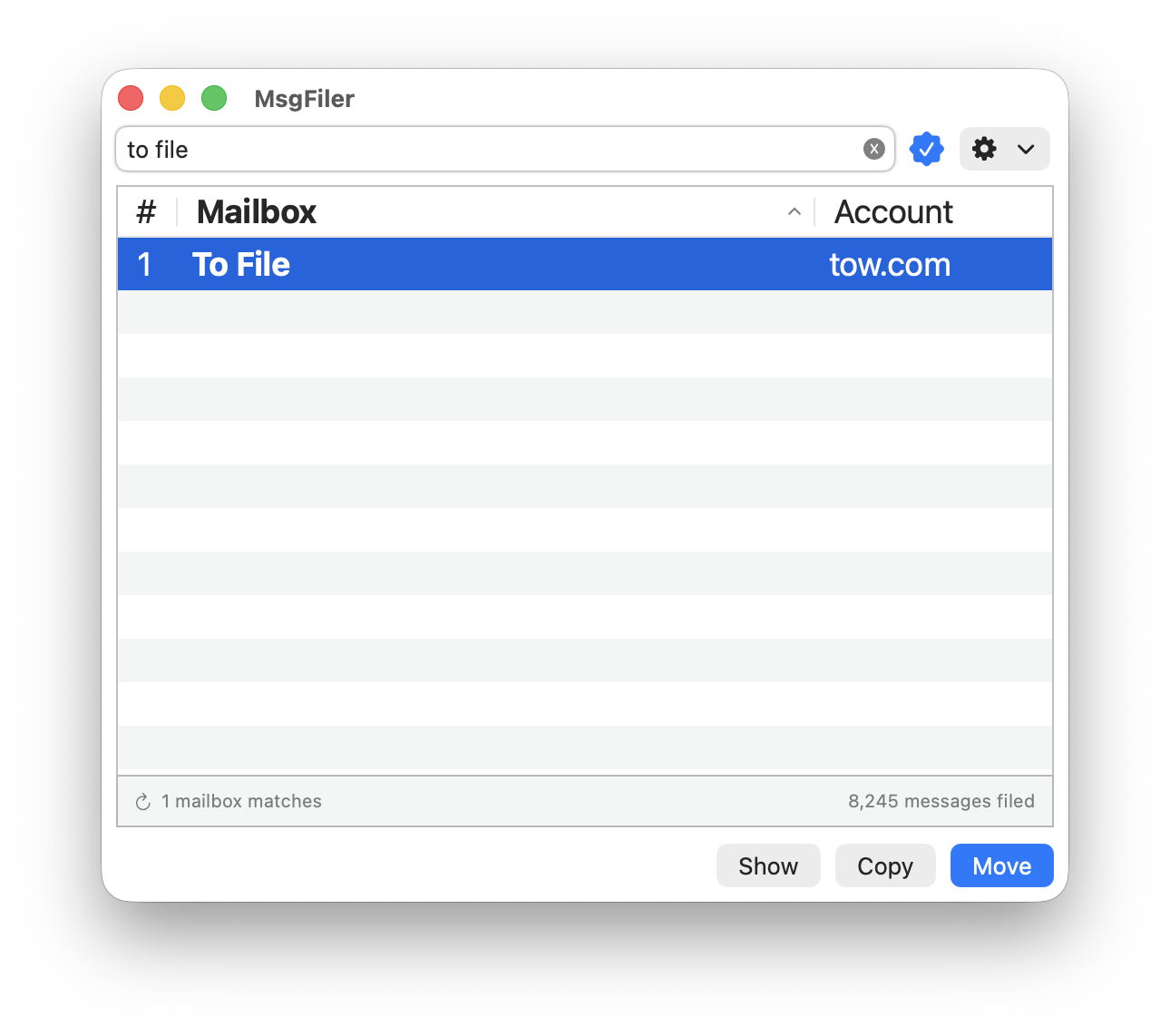
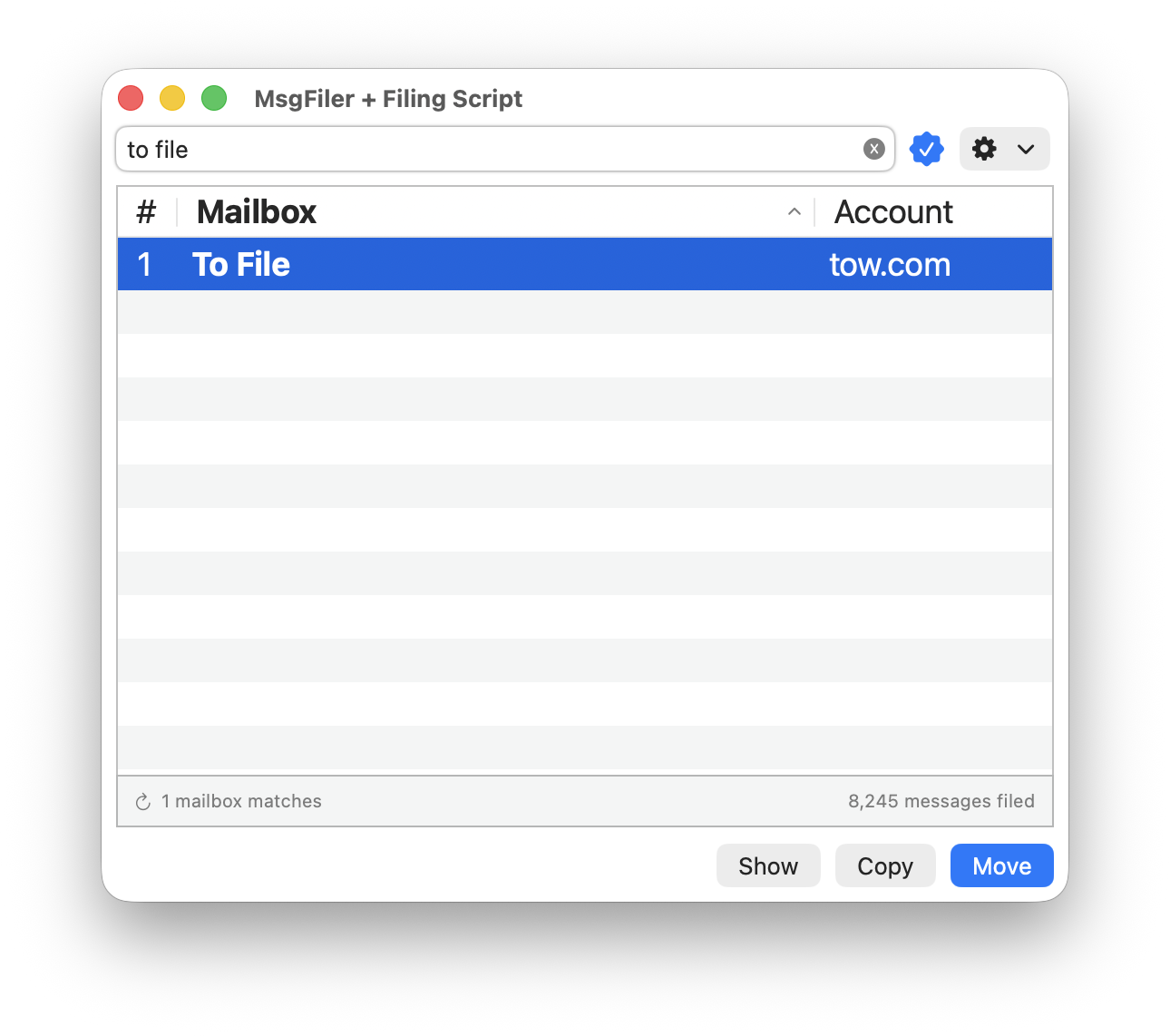
Once and if MsgFiler Filing Script has been installed and enabled, MsgFiler 4's title bar will change to read MsgFiler + Filing Script.
## Automation Permission
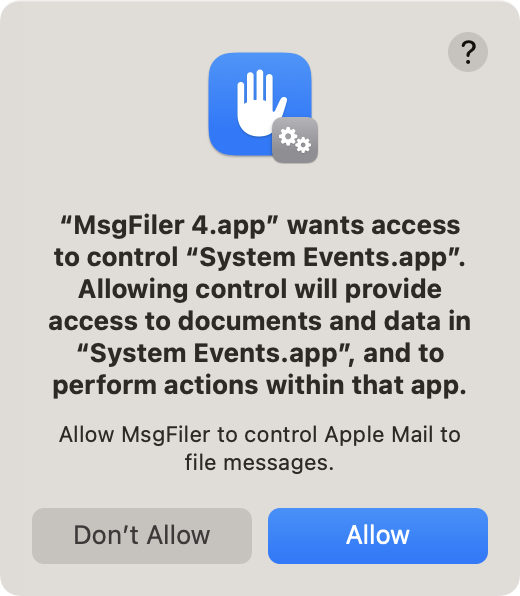
If you install the MsgFiling Filing Script, an additional Automation prompt will appear asking you to grant MsgFiler 4 access to control System Events. This is required in order for the MsgFiler Filing Script to work properly.
You must allow MsgFiler 4 to control System Events in order for the Filing Script to work properly.
## Re-installing the Script
At any point, you can re-install the MsgFiler Filing Script by following these steps:
1. Open **MsgFiler 4**.
2. Choose **Settings…** from the **MsgFiler 4** menu.
3. Click **Filing**.
4. Click **Installation Guide….**
5. MsgFiler 4 will display a dialog with instructions on how to download the MsgFiler Filing Script disk image.
6. Open the disk image.
7. Navigate to the following directory: `~/Library/Application Scripts/com.atow.MsgFiler4`
8. Copy the **MsgFiler Filing.scpt** file into the folder that comes up.
{% hint style="info" %}
If and when there are updates to the MsgFiler Filing Script, MsgFiler will prompt you to update the script as well.
{% endhint %}